

Where To Draw Folds On Clothes
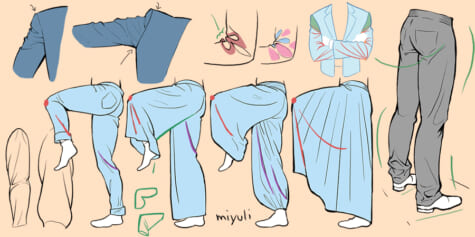
Cloth and folds can take all sorts of forms depending on the softness of the material and the shape of the body. This illustrated tutorial by comic artist miyuli covers bones concepts and approaches for drawing fabrics of all kinds.
Folds depend on the class they fall on. They are not universal. There are many unlike types and factors that influence them.
There is no single rule on how to draw folds—The best way to understand drapery is to practice equally many studies of folds every bit you can. The more realistic yous desire to draw and paint folds, the more than references you will need. Understanding some mutual principles will brand it possible to describe them convincingly in a more stylized way.
I've nerveless some pointers and commonalities hither that I've come across then far.
Materials
Information technology is very important to consider the materials that you draw when dealing with folds. They all have their very ain characteristics that help to decide where to put the appropriate folds. Their texture dictates how diffused the shadows are.
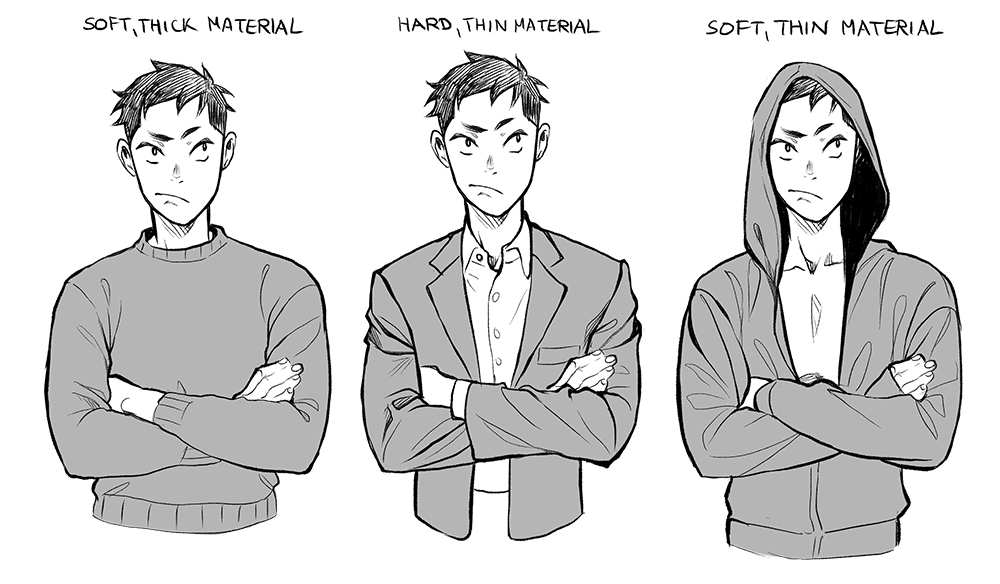
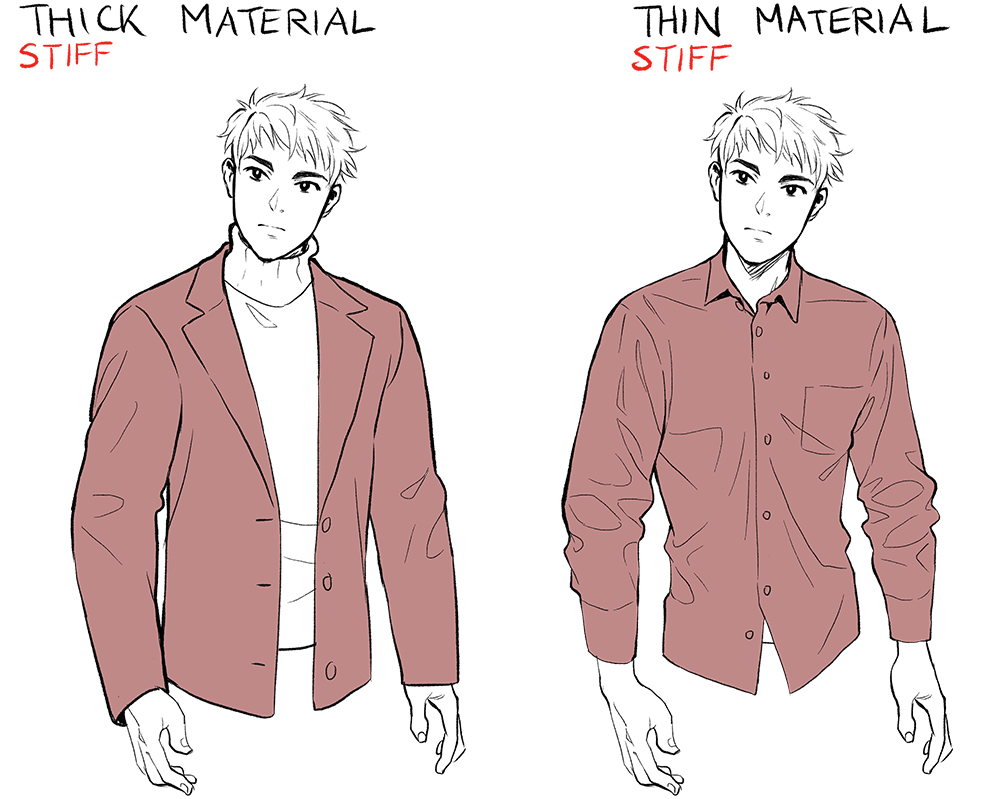
Thicker fabric has wider folds that are ordinarily less visible.
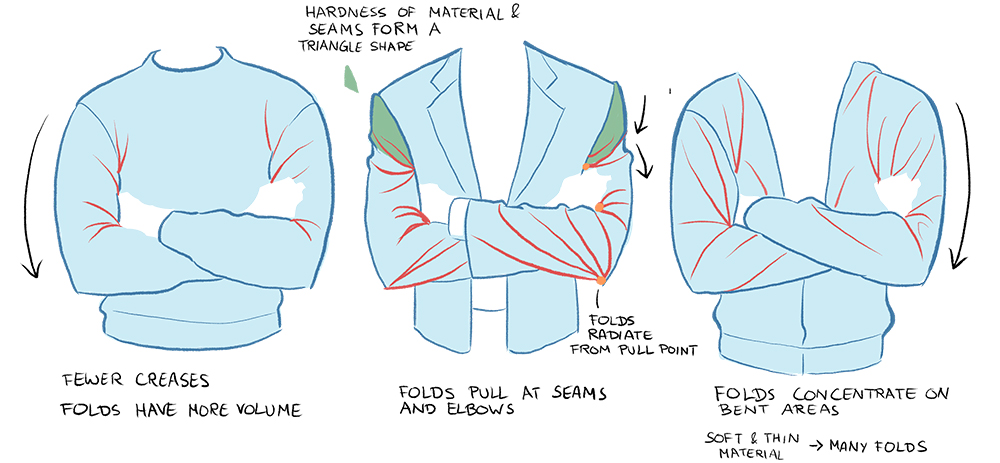
Hard materials are usually pulled more than at the bending expanse or at the seams.
Soft and thin cloth produces the most folds, specially around the bending areas.
The amount of folds also depends on how heavy the fabric is and what kind of material it is made of. When cartoon fabric it is a good idea to consider how thick/sparse, difficult/soft, heavy/light and smooth/textured the textile is start.
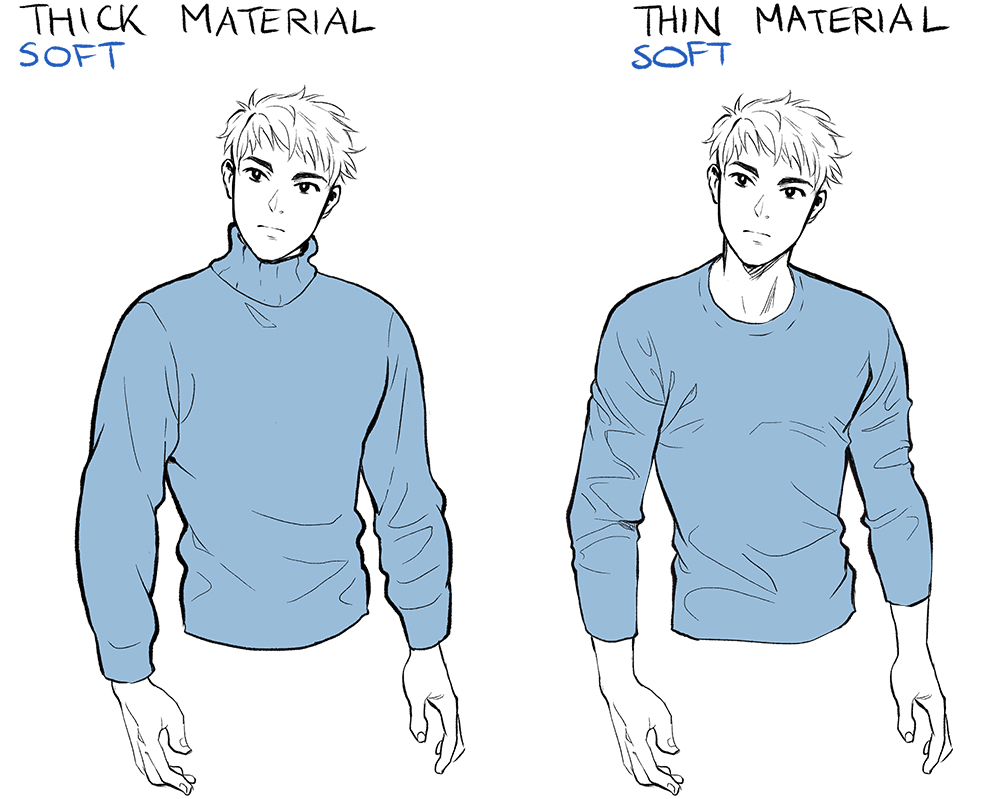
Heavy cloth causes folds of a unlike volume and different width. Information technology is as well more than idle and shows fewer folds even when moving.
All clothes have their ain arrangement of parts, which heavily influences the formation of folds.
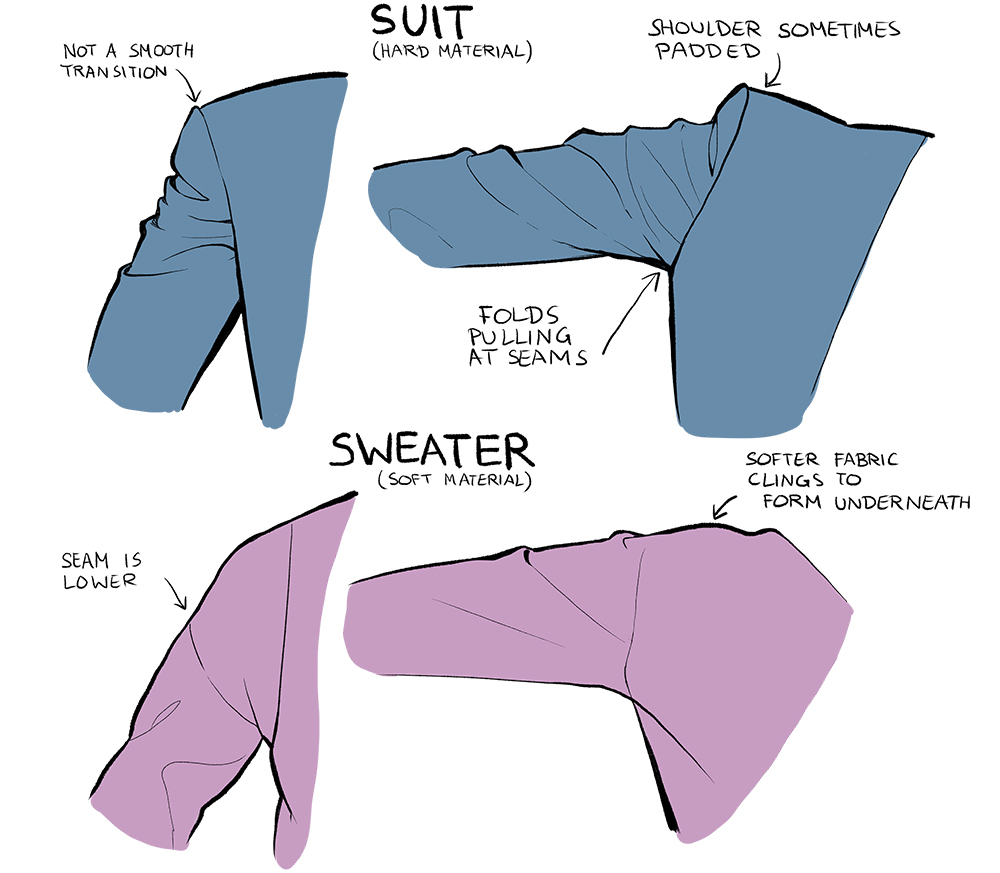
It's good to familiarise yourself with common placements of seams. You don't demand to depict them all, but it is better to have a good key cognition of the construction.
Folds tend to pull at prominent seams, especially on clothes similar suits where the transition betwixt seams is quite noticeable at the shoulder.
Sweaters usually have their arm seams much lower and the folds don't pull at them as much.
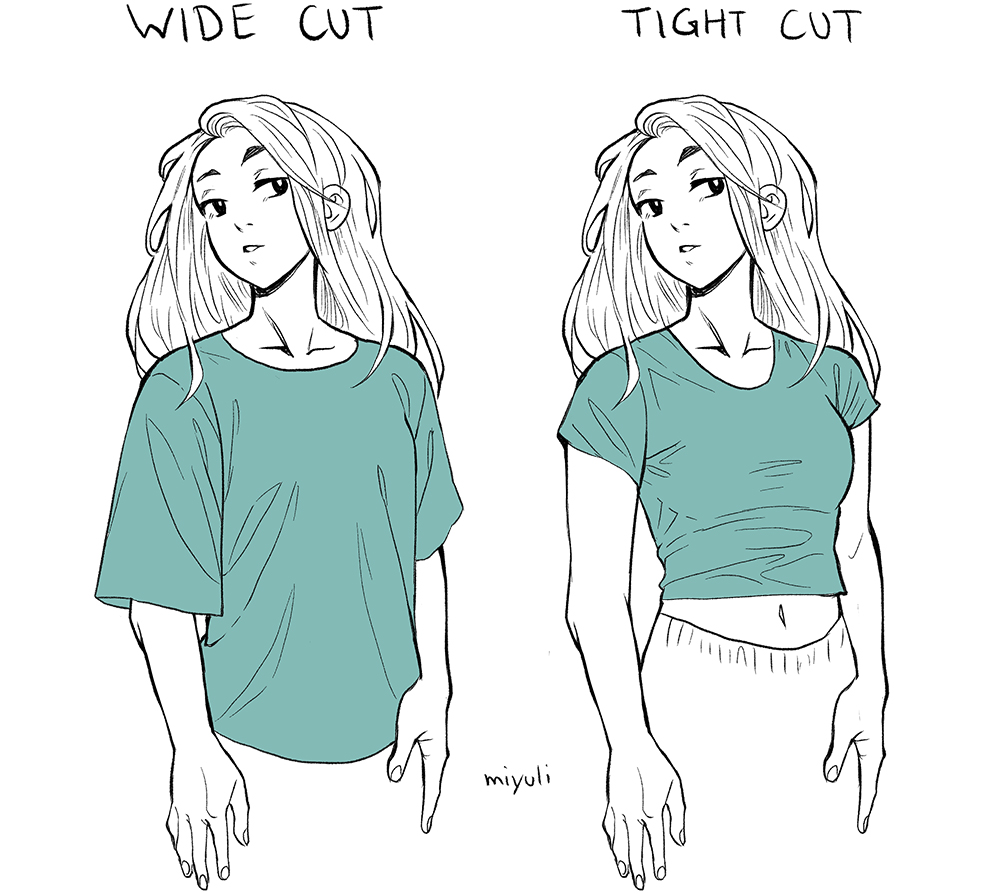
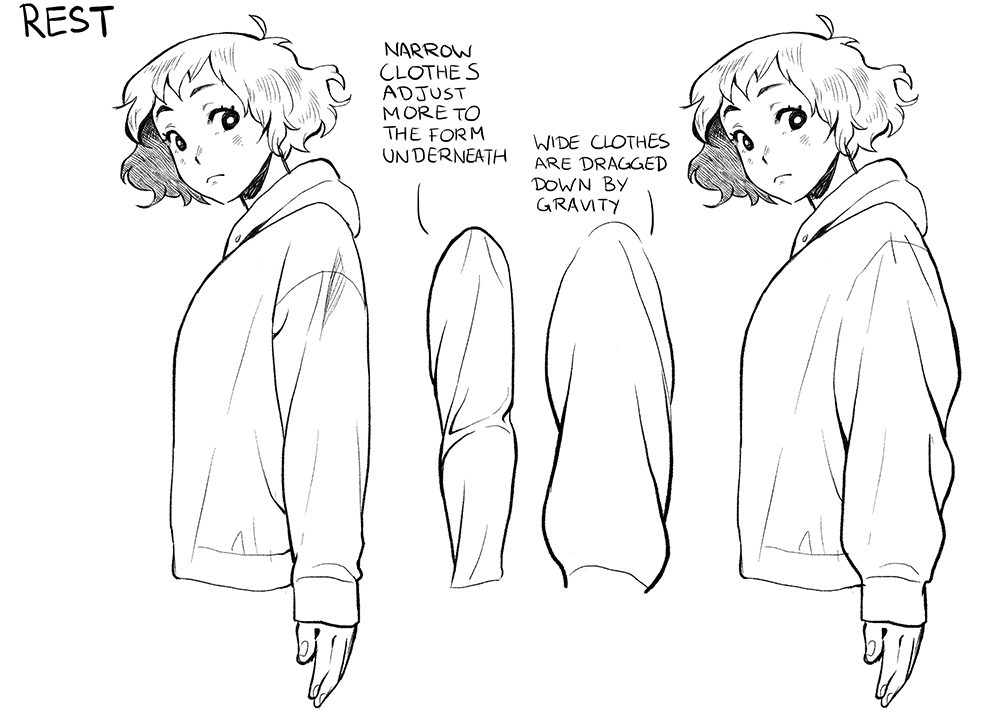
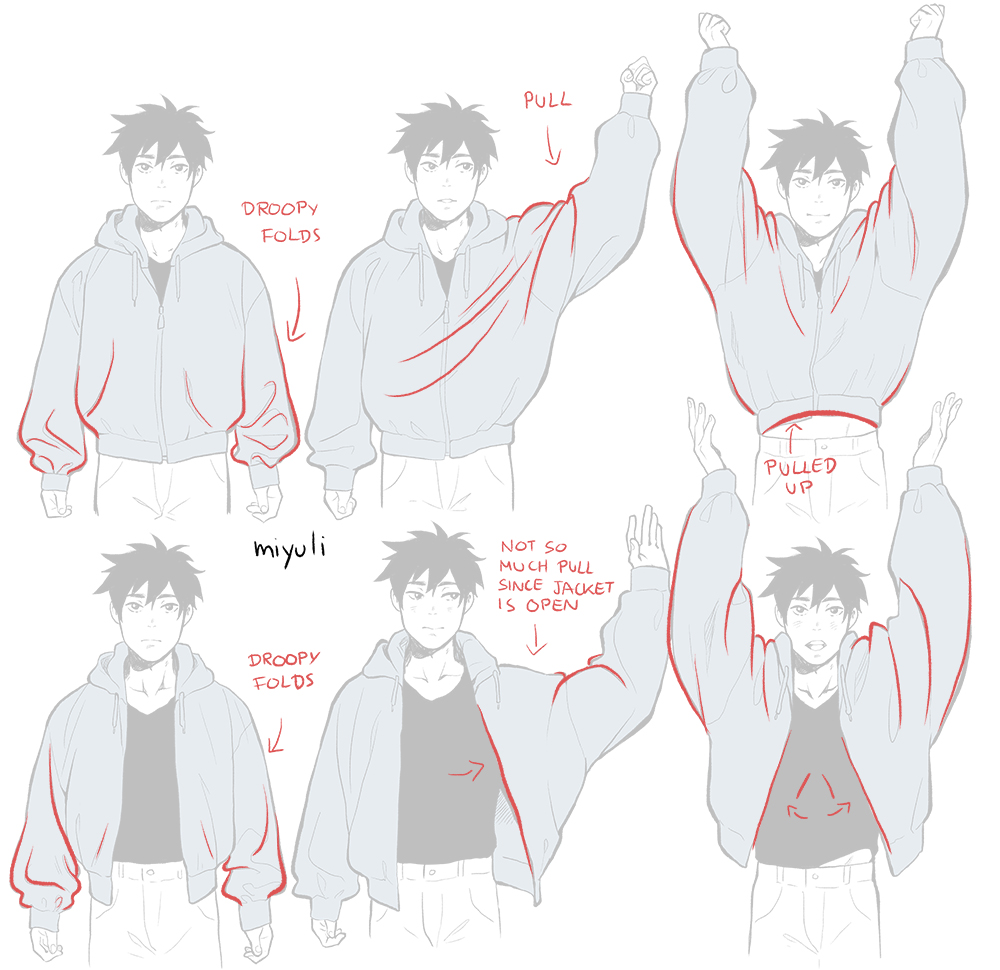
Clothes with a wide cut prove dissimilar folds than dress with a narrow cut. A tight cut follows the form of the body and wraps around it. Wide dress show a lot of droopy folds that go from the pulling bespeak towards the ground.
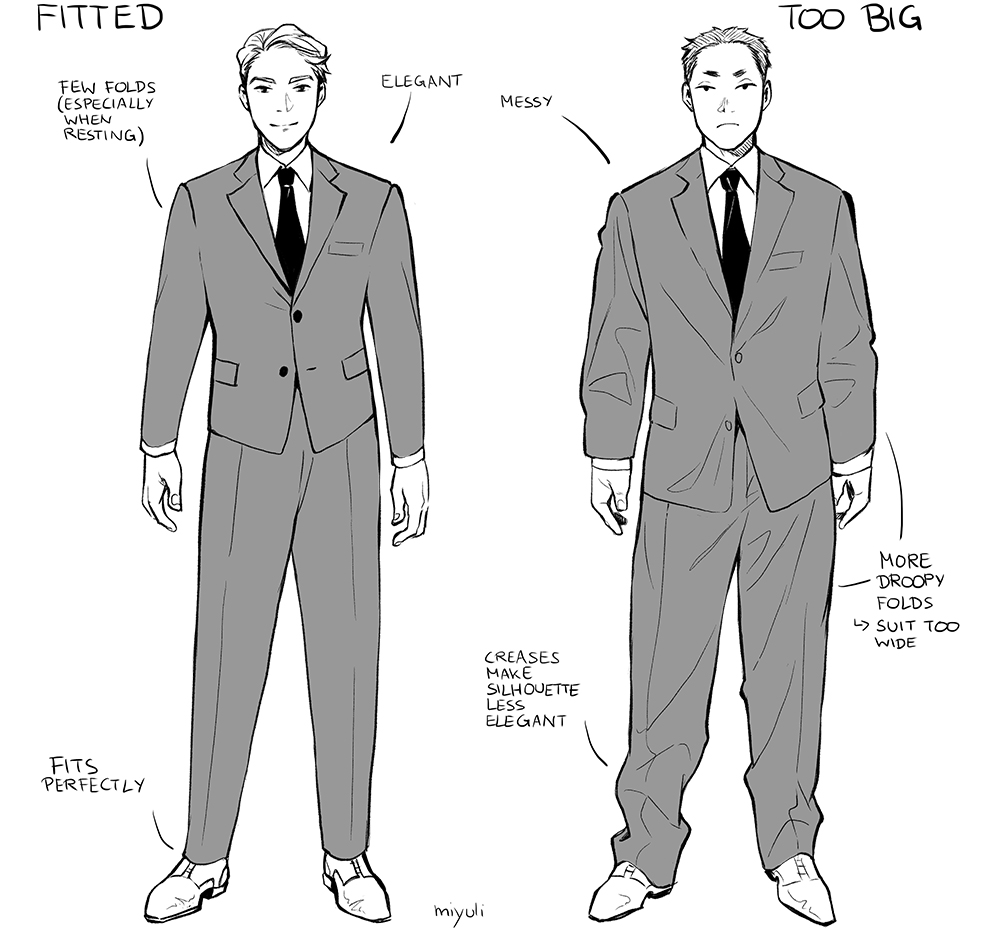
Clothes are often designed with folds or lack thereof in mind.
Fitted material is designed to look elegant with as few folds as possible. When clothes are too tight or as well loose in that location are more folds that requite a less elegant appearance of the clothing, specially when looking at the silhouette.
Worn-out material tends to crease more new or well-maintained fabrics.
Notation: When drawing clothes and folds, information technology can help to consider what material fits the character's personality kickoff.
External influences
Folds can be heavily afflicted by wind or water.
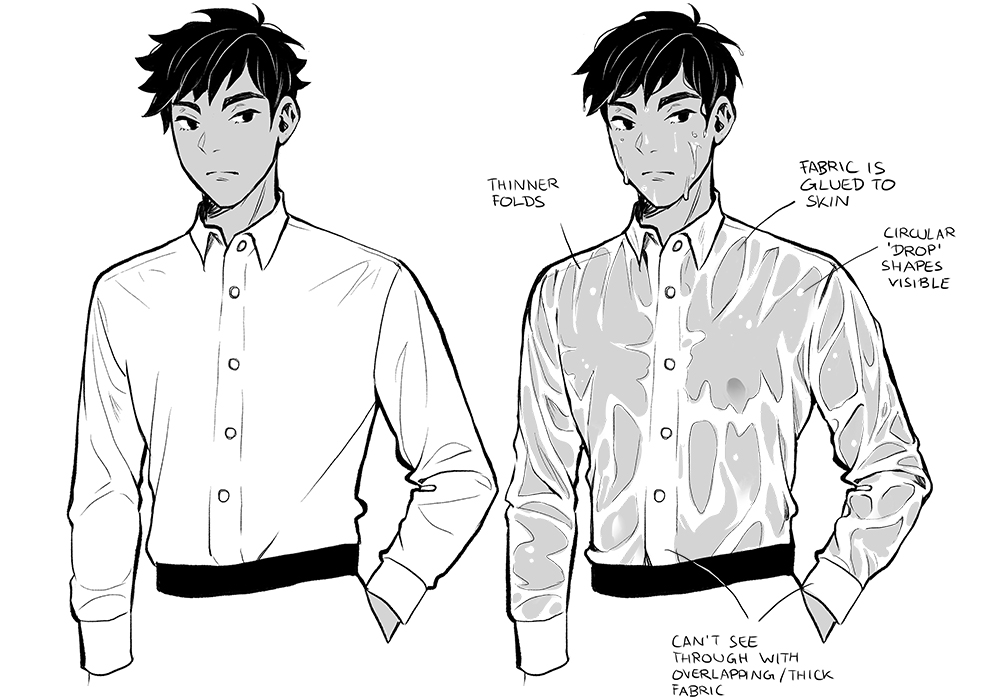
Wet cloth acts differently from dry cloth. It tends to stick more than to the class underneath. The water makes the calorie-free cloth a lot heavier, so it does not move as easily anymore. Thin fabric becomes encounter-through.
Move
When the trunk is resting the fabric is unremarkably dragged down by gravity. More prominent droopy folds appear the wider and lighter the fabric is.
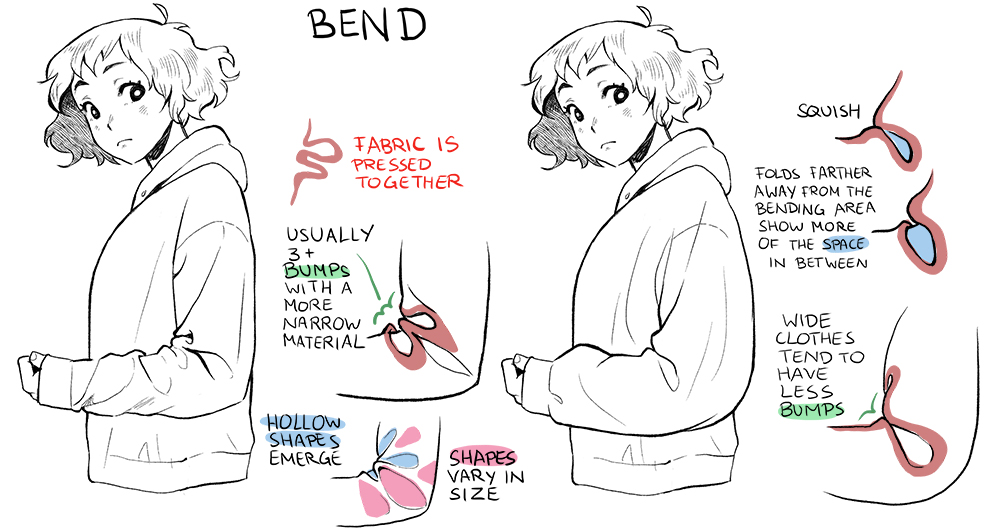
When bent the material is pressed together and creates hollow shapes that vary in size.
There are more than bumps with more narrow fabric. Wide fabric tends to squish together with fewer folds.
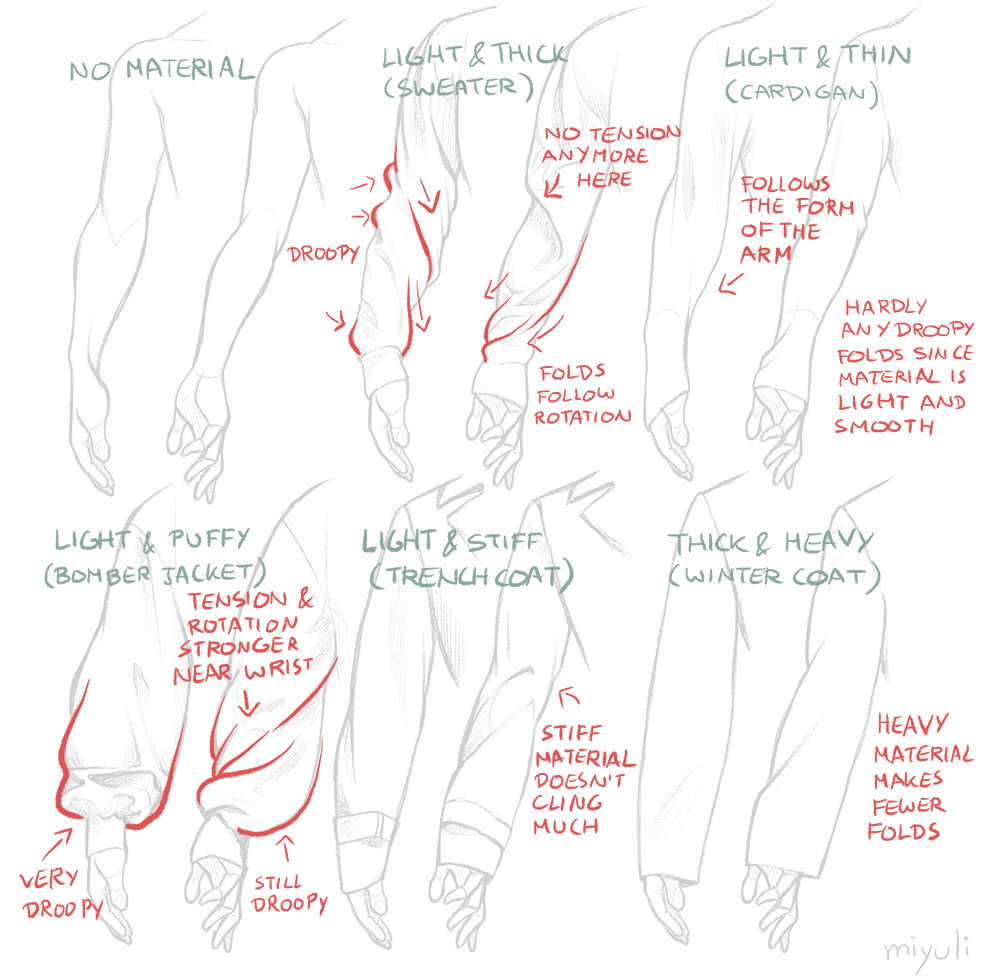
The material adapts to the forms' movement. Folds usually follow the twist. It tin be very helpful to emphasize the movements.
Note that the lighter and thinner material in the example above shows fewer folds since the arm is notwithstanding generally resting.
The arms heavily dictate the pulling areas where folds emerge.
Opening a jacket absorbs some of the pulling when the artillery are raised.
Pants
The fabric of the pants is supported at the waistline.
Pants first wider and narrow down to the knees because they adjust to the bone structure of the legs.
With narrow pants, creases are usually visible at the knees.
When drawing bumps in the fabric it's skillful to prove their origin and book. It does make a visual difference when yous can imagine the folds in a 3-dimensional space.
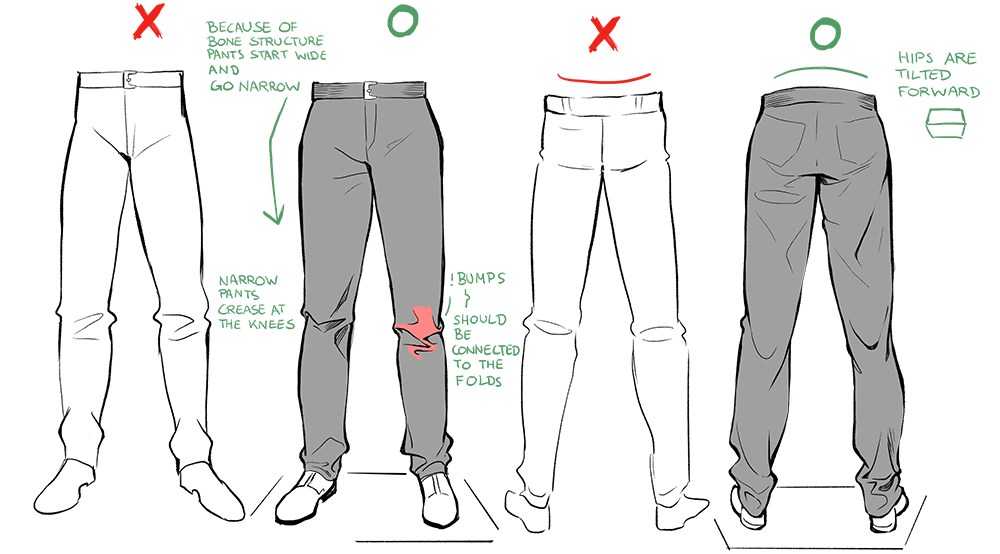
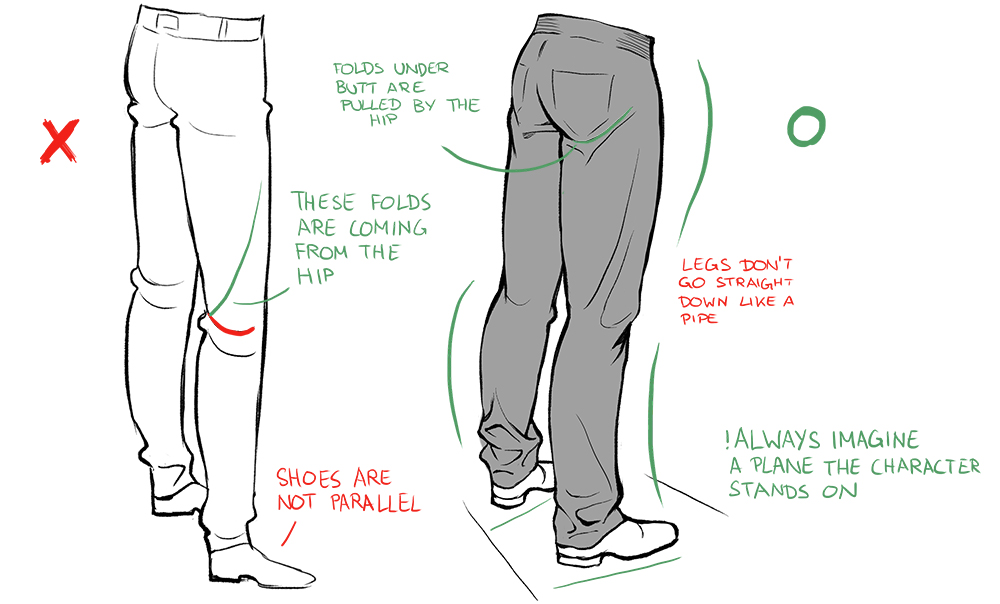
From the back, you can see folds forming under the butt region that get upwards to the hip.
The folds at the knees are too visibly pulled by the hips from the back view.
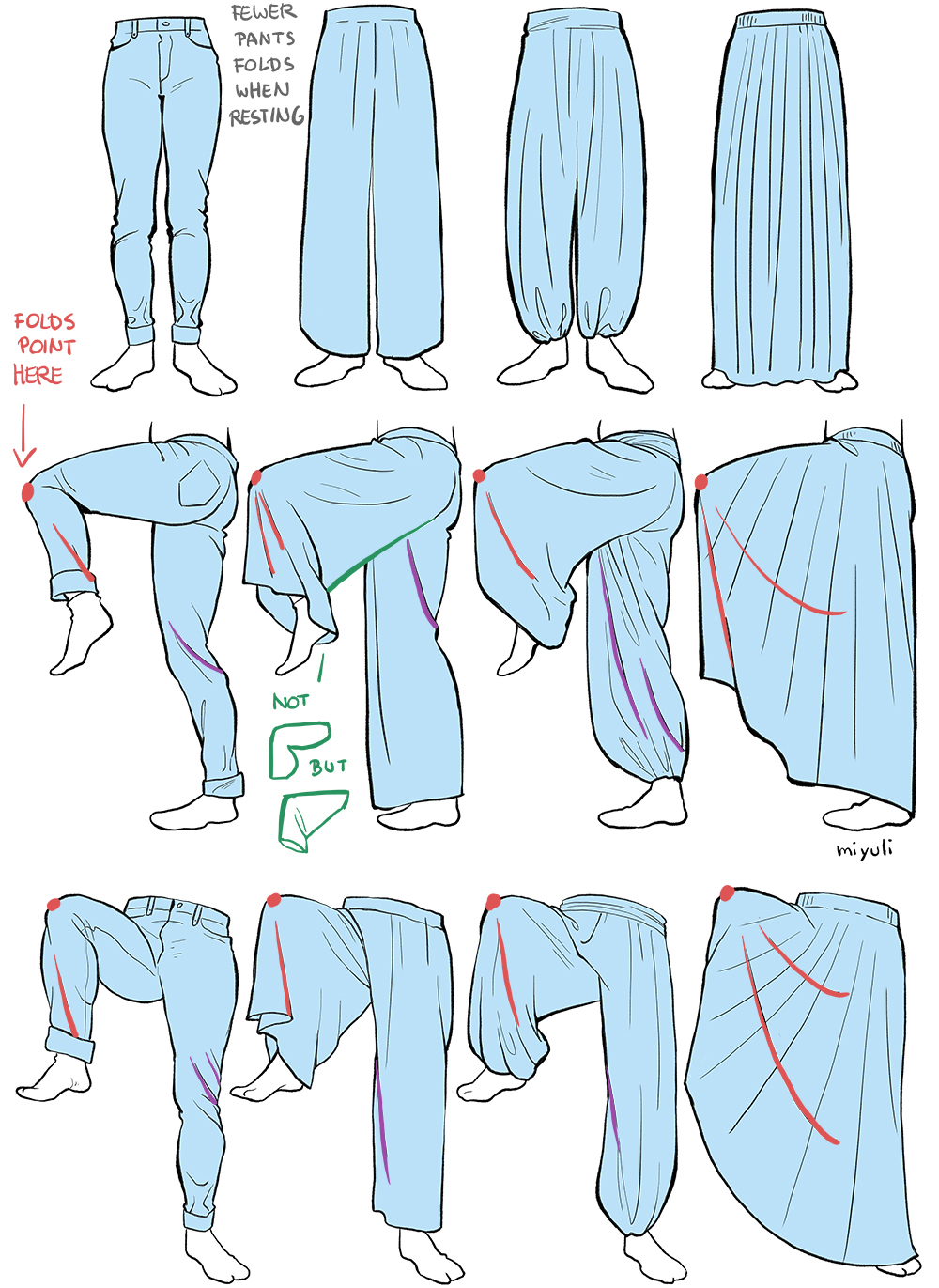
In general, when the body is just standing and resting, there are less dynamic folds.
When a leg is lifted, the human knee becomes the strongest pulling point.
Exist careful of the forms that the pant legs create when the leg moves.
Shadows and Highlights
Depending on the thickness of the material the shadows around the folds appear slightly different.
When shading folds, information technology's skilful to use a combination of soft and hard edges.
When painting pay attention to how polish and soft the material is. The smoother it is, the more it reflects light and has a brighter highlight. Rougher and more textured materials diffuse light.
The darkest area is usually where forms are pressed together and an occlusion shadow appears. This besides applies to very deep creases where light does not achieve.
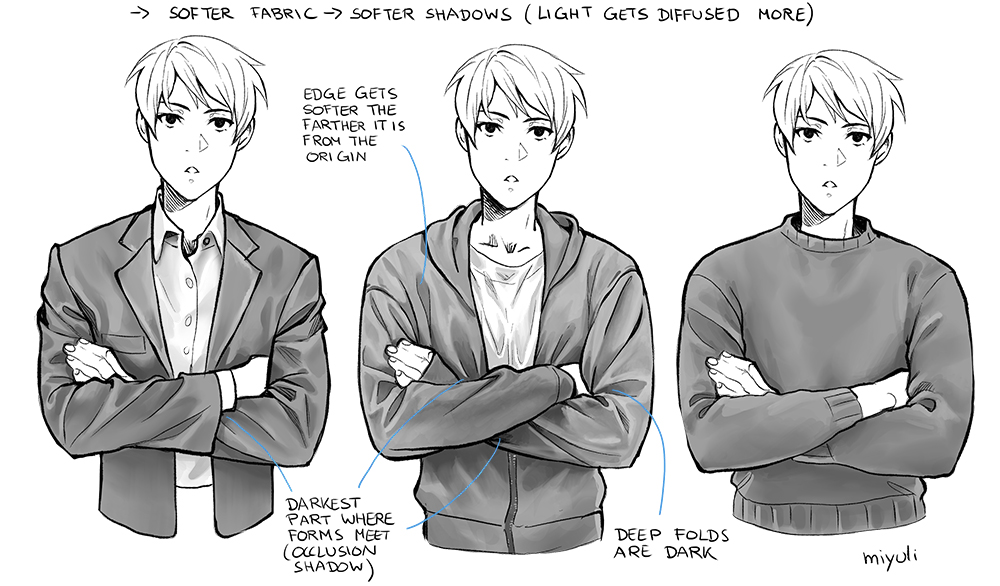
Here are some quick tips that I noticed while shading materials.
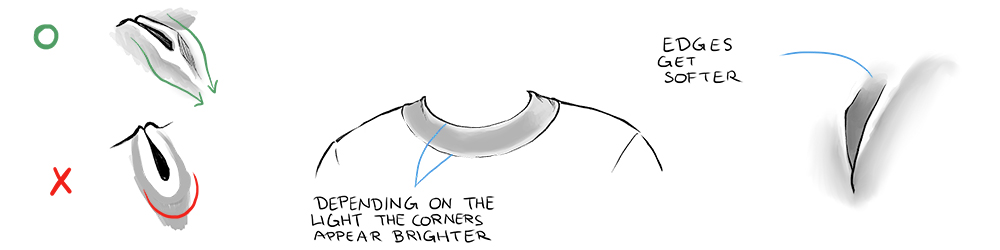
The shading, similar the width of the folds, varies between soft edges or highlights depending on the material, so it'southward good to familiarise yourself with every bit many materials equally possible to build upward a rich visual library.

Where To Draw Folds On Clothes,
Source: https://www.clipstudio.net/how-to-draw/archives/157926
Posted by: raleyjuste1960.blogspot.com
0 Response to "Where To Draw Folds On Clothes"
Post a Comment